
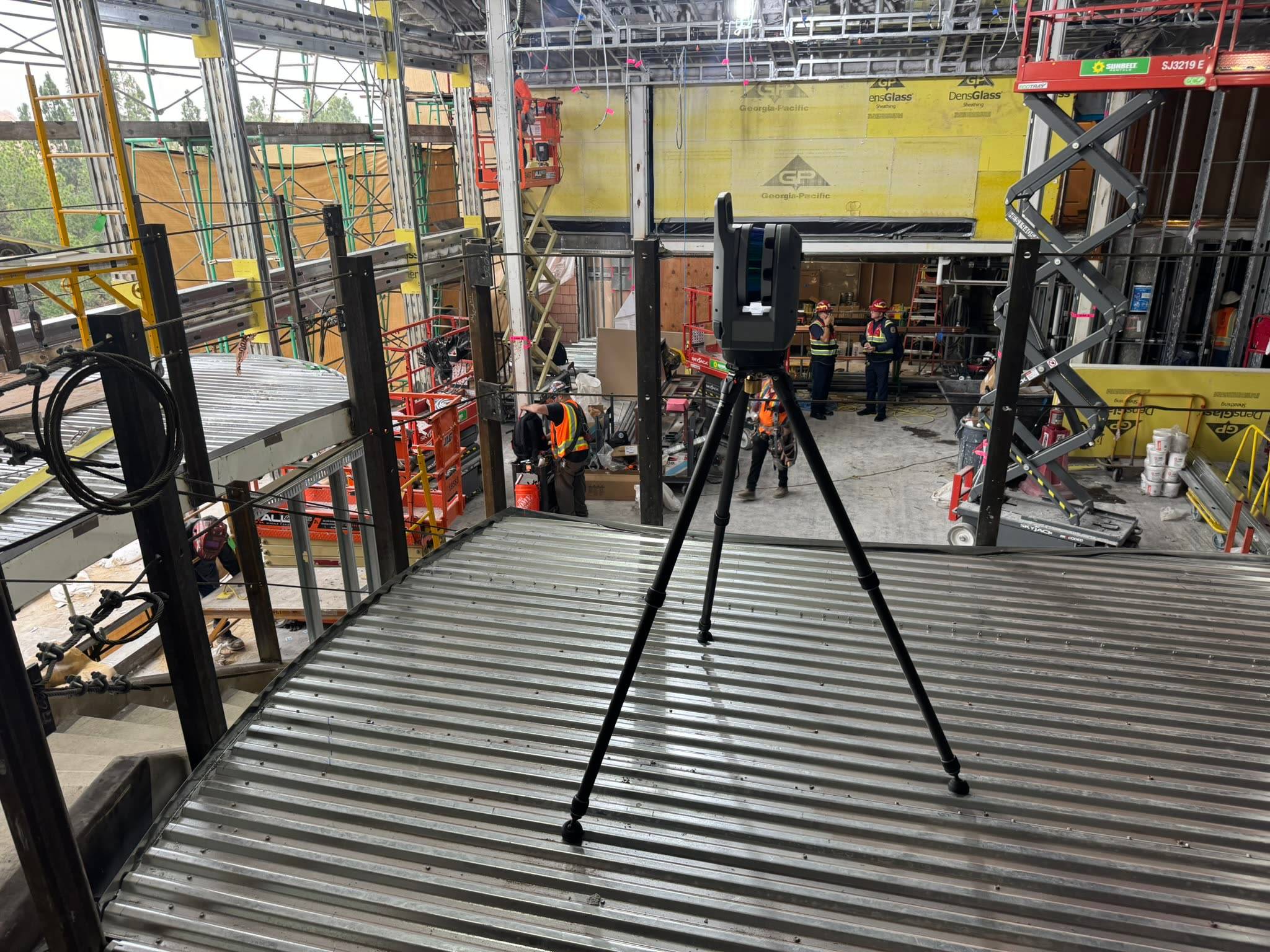
Field measurement
3D Laser Scanning for Fabrication
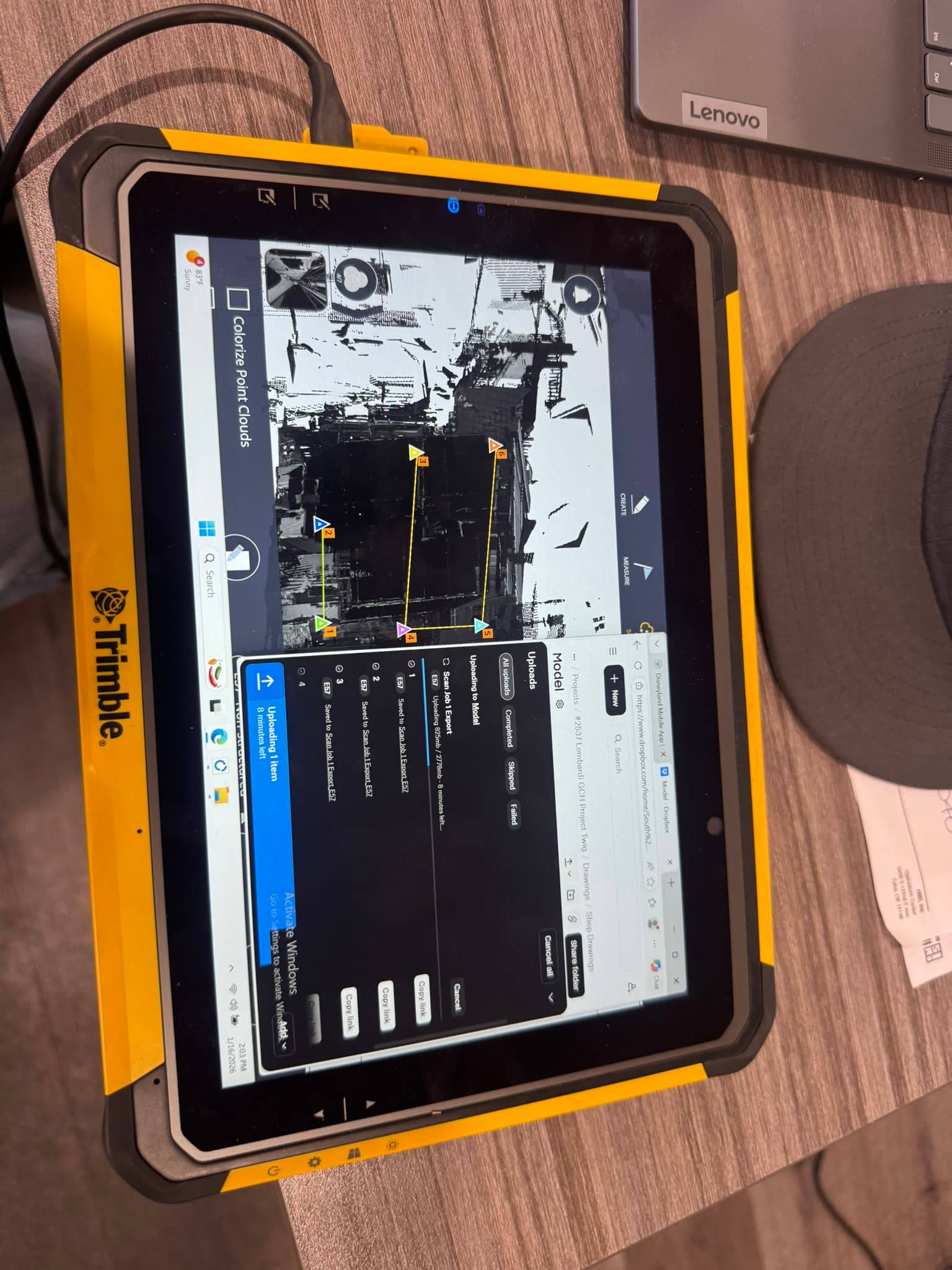
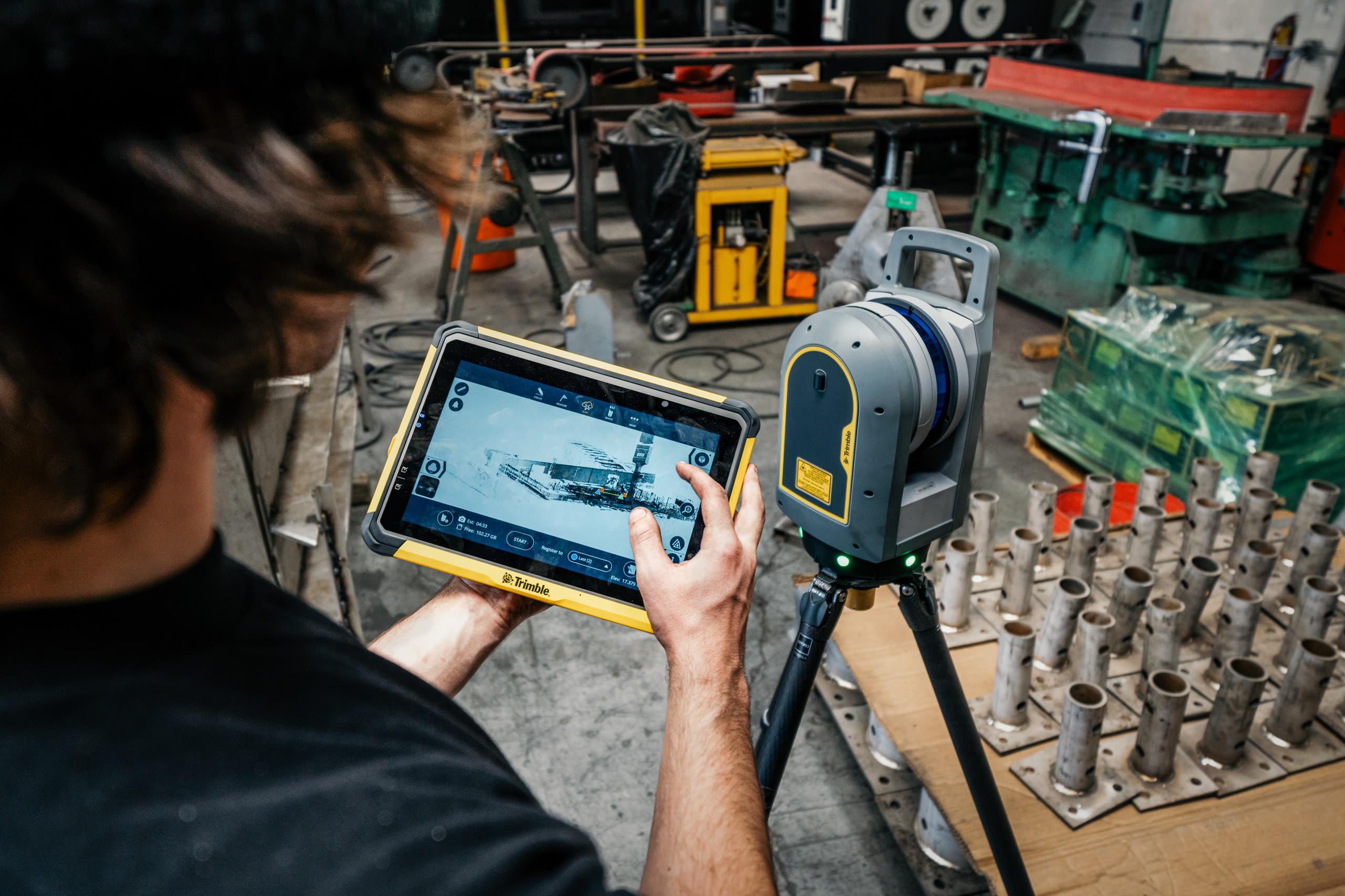
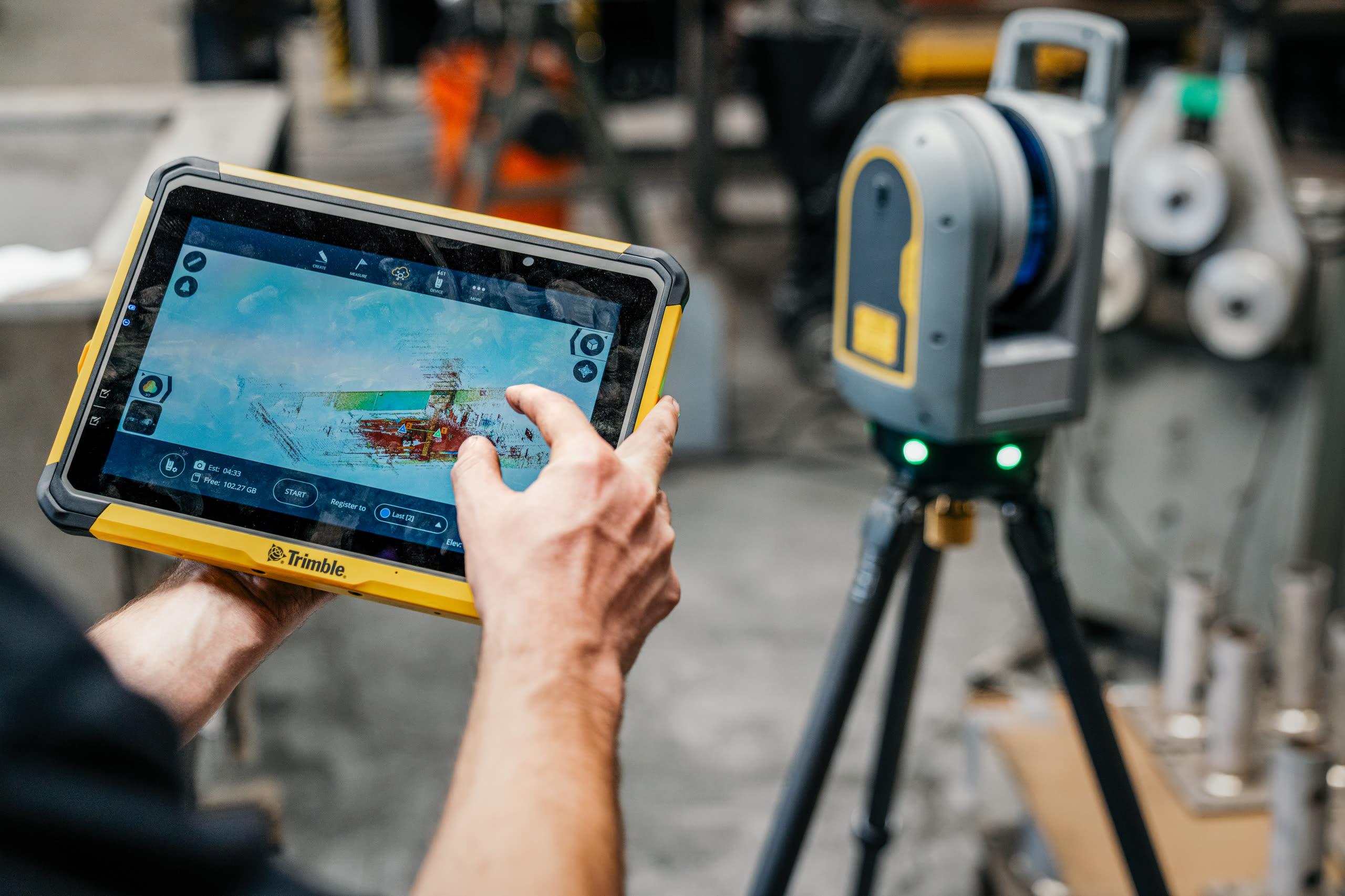
We use a Trimble X9 3D LiDAR scanner to capture existing conditions instead of taking field dimensions by tape. A scan takes as little as 20 minutes, or a full day on a large structure, and produces a model accurate enough that parts fit the first time. On a 40 foot stair it put us within 0.03 inches of where the steel was supposed to be.
- Metal Fabrication
- Structural Steel
- Custom Fabrication
- Access & Safety Systems
- Silos & Hoppers
- Laser Cutting
At a glance
Specifications
The 0.03 inch figure is one installed assembly, not a guaranteed tolerance. It is reported because it is the number we measured.
| Scanner | Trimble X9 3D LiDAR |
|---|---|
| Time on site | From about 20 minutes, up to a full day on a large structure |
| Output | Measurable 3D model, taken straight into detailing |
| Measured result | Within 0.03 in over a 40 ft installed stair |
| Detailing | In house, SolidWorks |
What we cover
- One site visit instead of three or four
- Nothing missed, because the whole space is captured rather than selected dimensions
- Existing conditions as built, not as drawn
- Fewer field modifications, which is where fabrication budgets go
What it replaces
The old way is a tape measure, a notebook and a drive back to the shop. Then the detailer finds a dimension nobody wrote down, or an offset nobody allowed for, and somebody goes back. Three or four trips to a site before the dimensions are settled was normal, and every one of them is a day the steel is not being made.
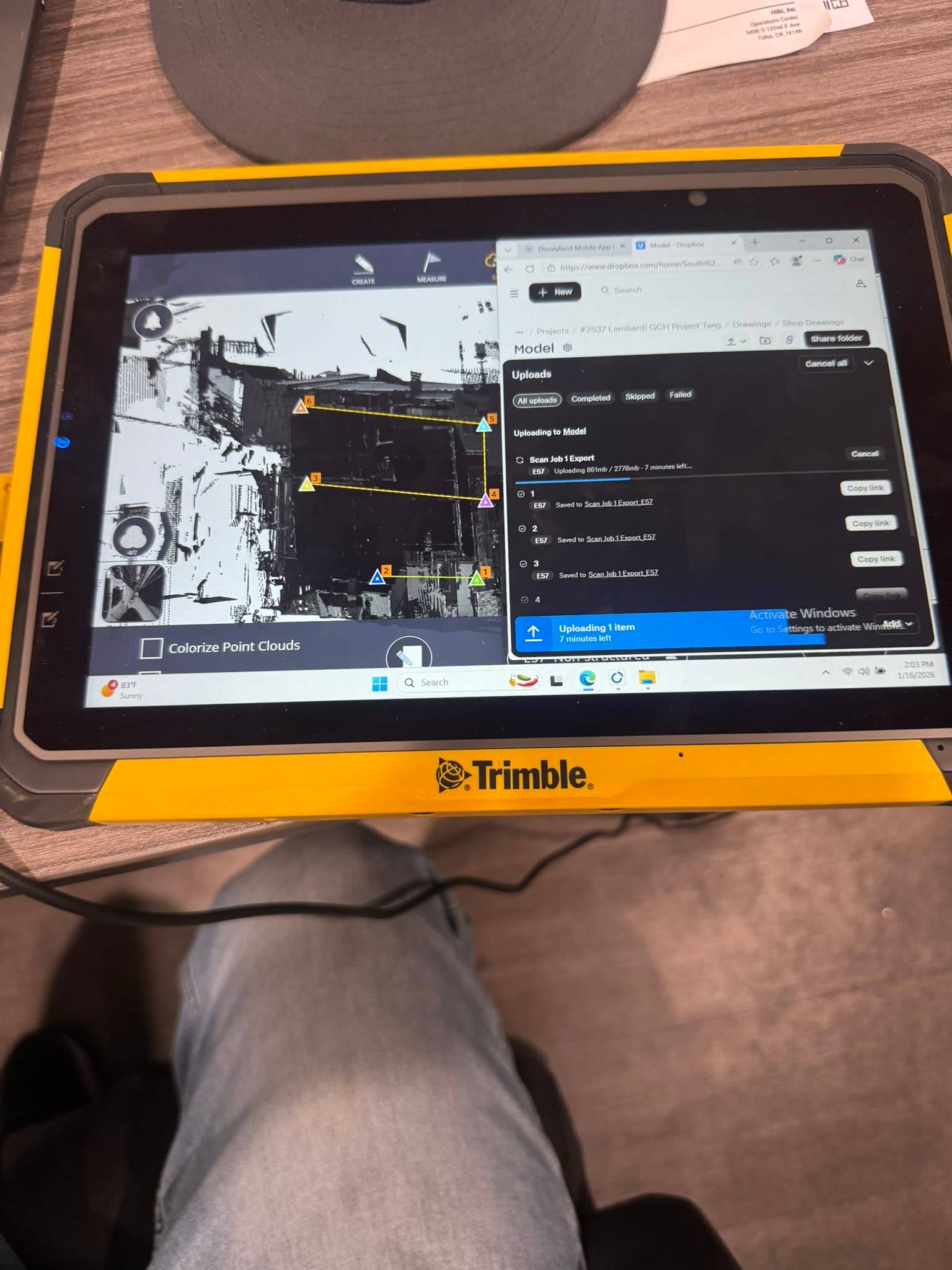
A scan replaces all of that with one visit. What comes back is a dense, measurable 3D record of the space as it actually is, rather than as the drawings say it was built. The detailer works from that, and the questions that used to need a return trip get answered on screen.
The first time we used it
It was a stair for a local hotel. We were not confident enough to rely on it, so we measured the old way as well as scanning. What we found was that our tape measures could not keep up with the scanner.
The finished stair was over 40 feet long. Installed, it landed within 0.03 inches of where it was supposed to be. Over that distance that is a tighter result than anything we had achieved by hand, and we have scanned ever since.
Placentia, California
From the shop
Before you call
Questions we get asked
Not answered here? The fastest route is a phone call to the shop.
Got a drawing? Talk to the shop.
Call and we will talk it through, or send the scope and drawing set and we will get back to you with pricing and a schedule.