
The hard geometry
Spiral and Curved Stair Fabrication
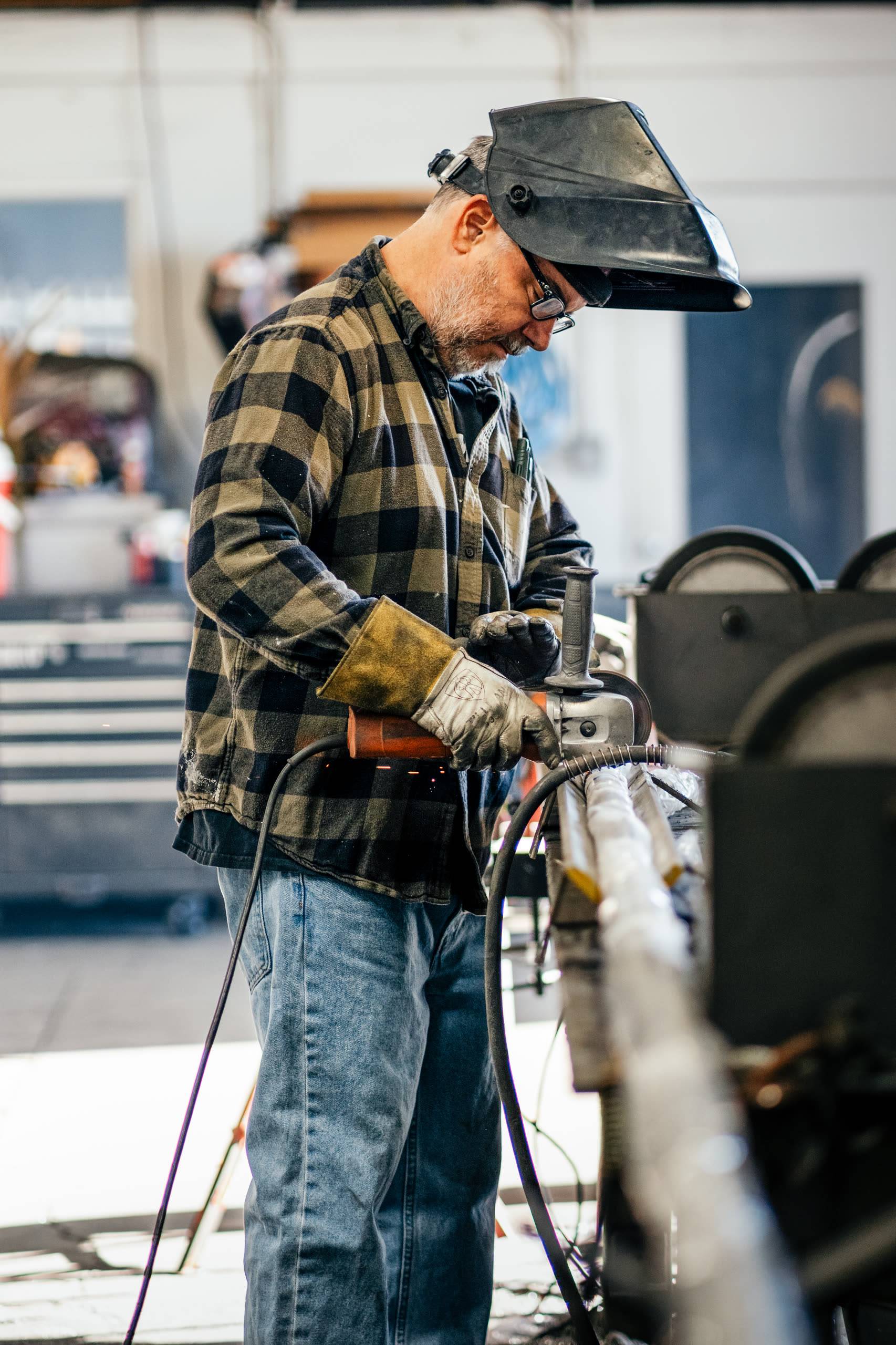
South Coast Iron fabricates spiral, curved, rolled and switchback stairs in steel, stainless and aluminum from Placentia, California. We scan the opening with a Trimble X9 before detailing, which is how a curved stair arrives and fits rather than arriving and being adjusted.
- Metal Fabrication
- Structural Steel
- Custom Fabrication
- Access & Safety Systems
- Silos & Hoppers
- Laser Cutting
At a glance
Specifications
| Configurations | Spiral, helical, curved, rolled, switchback |
|---|---|
| Materials | Carbon steel, stainless, aluminum, galvanized |
| Field measurement | Trimble X9 LiDAR, typically 20 minutes on site |
| Proven accuracy | 40 ft stair installed within 0.03 in |
| Detailing | In house, SolidWorks |
| Installation | Available, including nationwide on larger packages |
What we cover
- Spiral, helical, curved and rolled stringers
- Switchback and scissor configurations
- Steel, stainless and aluminum
- Grand feature stairs through back of house industrial
- Site scanned, detailed in SolidWorks, installed by us
Curved stairs punish measurement errors
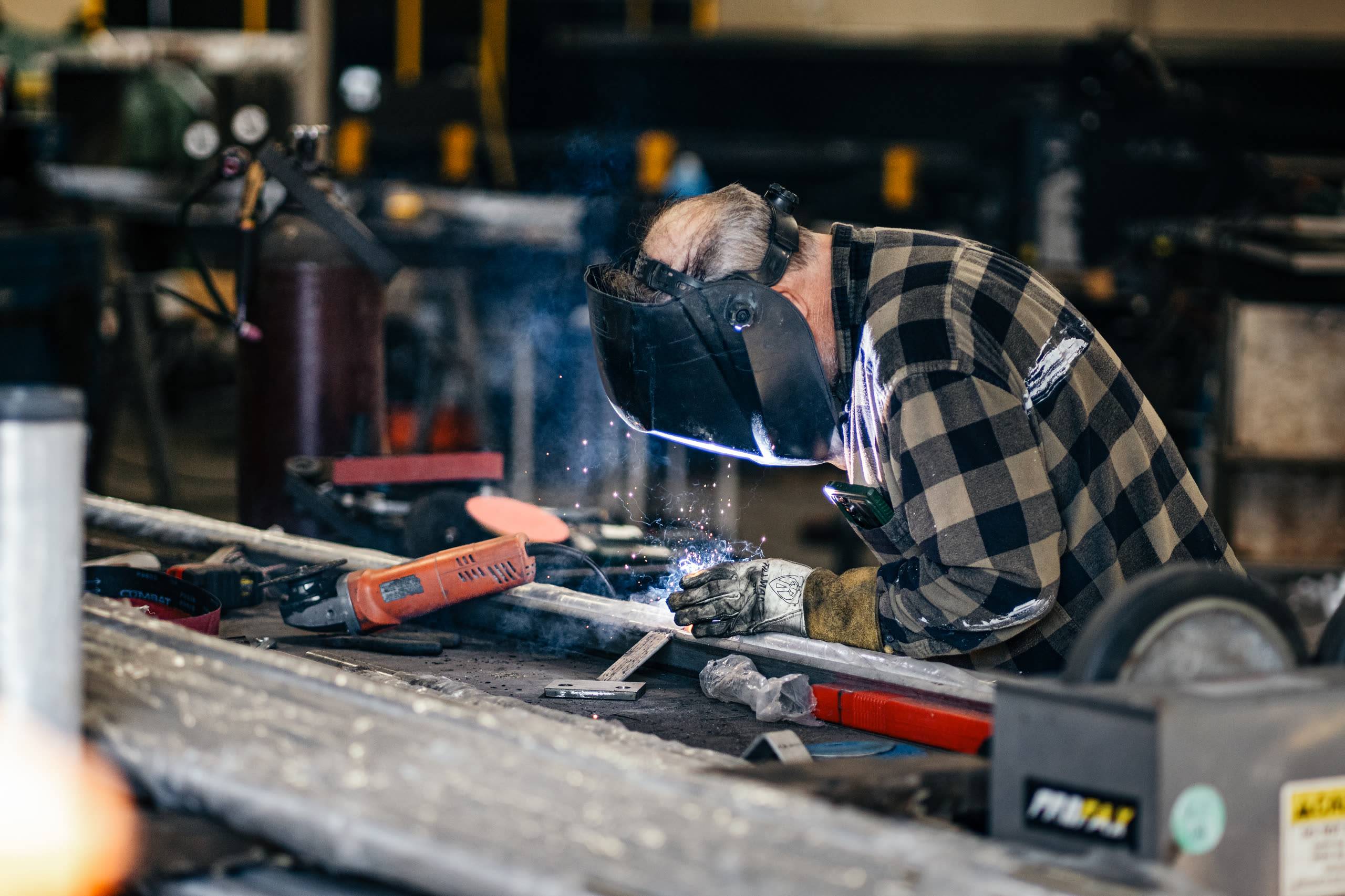
A straight stair that is a quarter inch out can usually be packed or trimmed on site. A curved stair cannot. The geometry is continuous, so an error at the bottom accumulates all the way up, and a stringer rolled to the wrong radius is scrap rather than something to adjust.
That is why the measurement matters more than the fabrication. Tape measuring a curved opening means multiple site visits, and it still leaves you trusting a set of numbers taken by hand in a live construction environment.
We scan the opening first
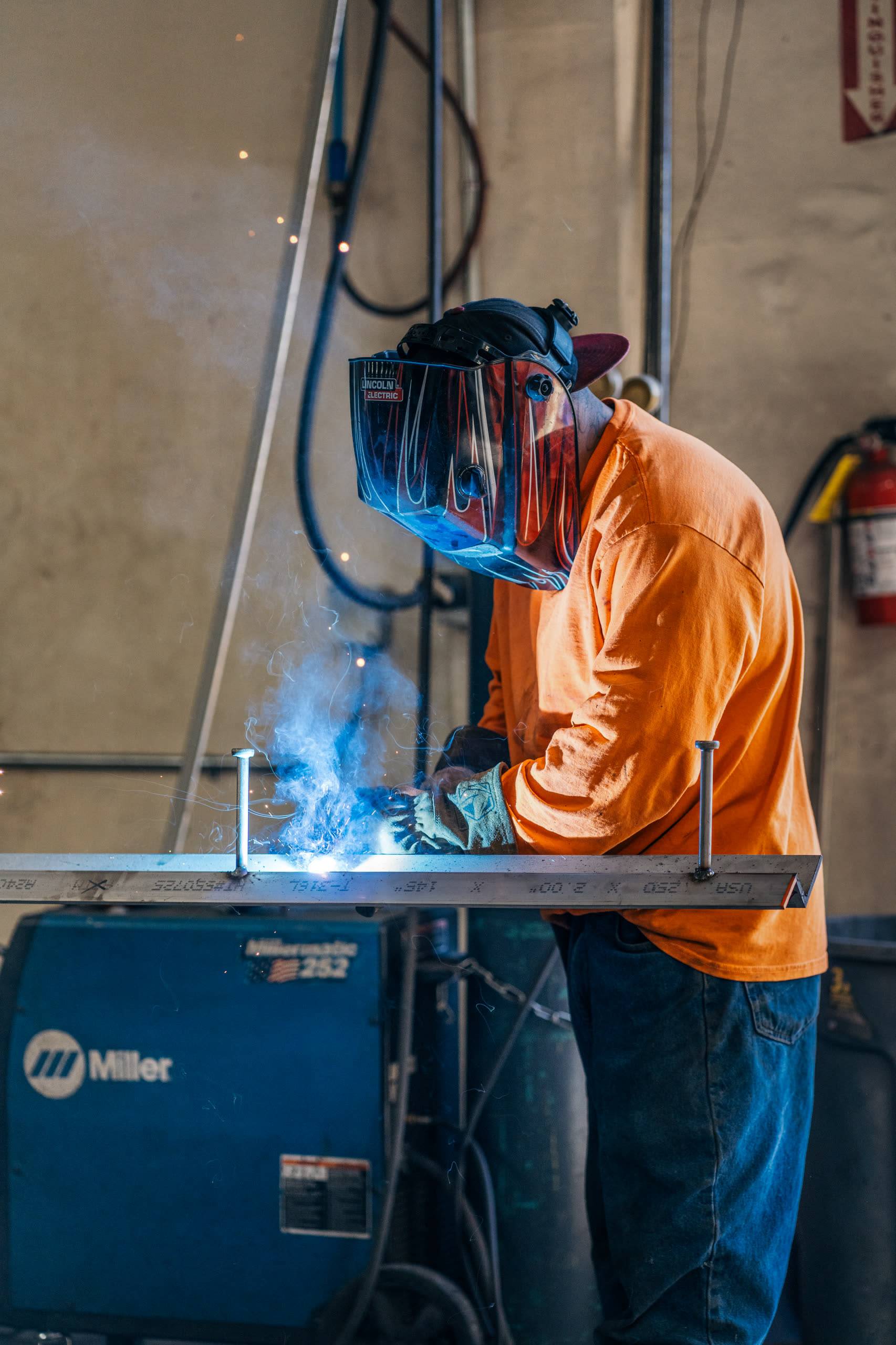
We use a Trimble X9 LiDAR scanner to capture the actual opening as a point cloud, usually in about twenty minutes, and the detailer works from that model rather than from a field sketch.
The first time we did this it was for a stair at a local hotel. We were nervous enough that we took tape measurements as well, and found the tapes could not keep up with the scanner. The installed stair, forty feet of it, landed within 0.03 inches of where it was supposed to be. That is the standard we now work to.
Feature stairs and industrial stairs are different jobs
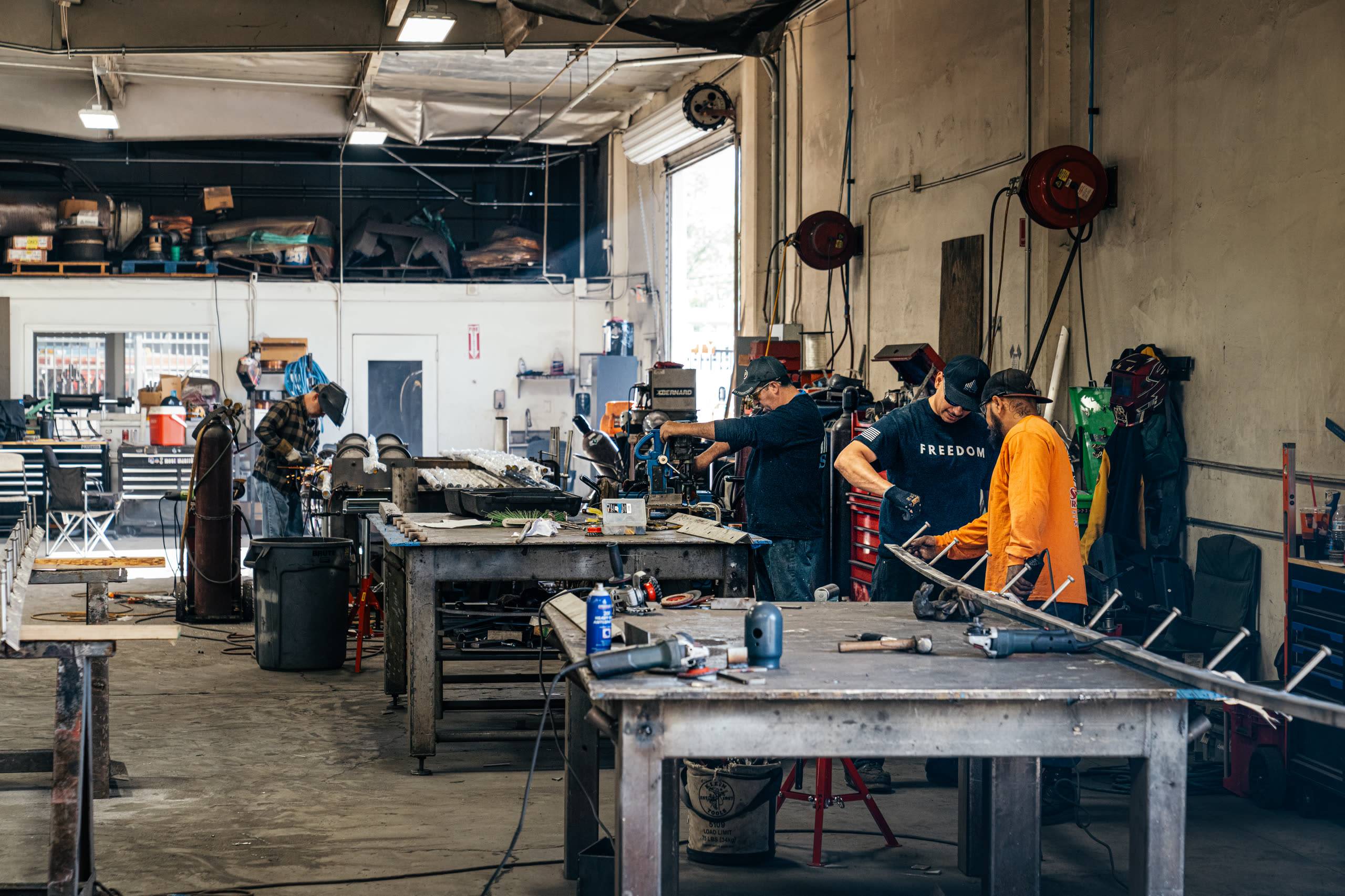
A grand stair in the middle of a lobby is judged on its welds, its finish and how the handrail feels under a hand. An industrial spiral stair in a treatment plant is judged on whether it meets code, resists corrosion and can be climbed in wet boots.
We build both, and we price and detail them differently. Telling us which one you are buying is the single most useful thing you can do at the first conversation.
Before you call
Questions we get asked
Not answered here? The fastest route is a phone call to the shop.
Got a drawing? Talk to the shop.
Call and we will talk it through, or send the scope and drawing set and we will get back to you with pricing and a schedule.