
Forty feet, one piece
Long Structural Steel Runs
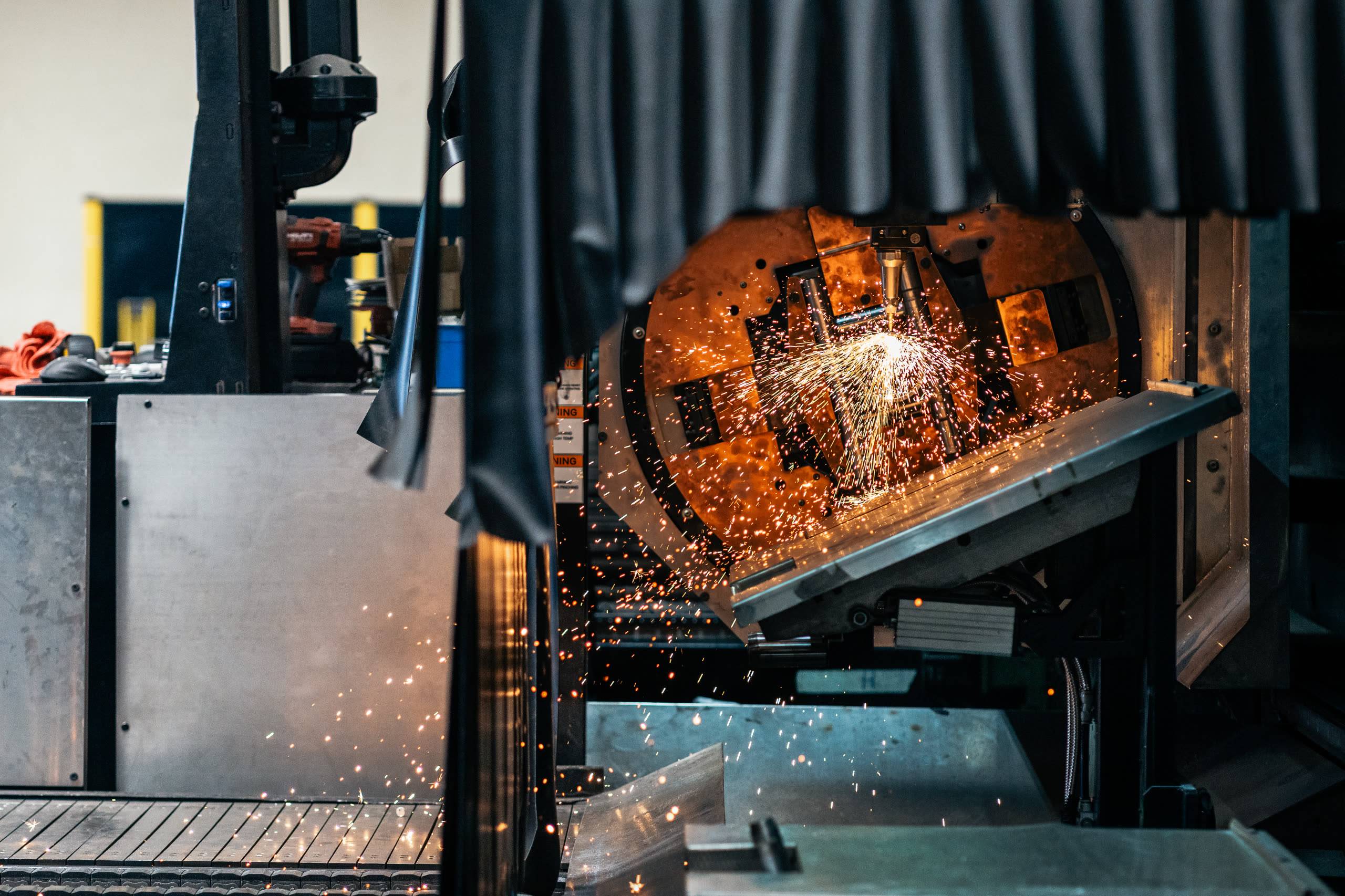
South Coast Iron processes structural sections up to 40 feet long on a tube laser with a 40 foot infeed and 24 foot outfeed. Beams, channel, angle, tube and pipe are cut, holed and coped in one piece, so a long run does not have to be spliced to fit through someone else machine.
- Metal Fabrication
- Structural Steel
- Custom Fabrication
- Access & Safety Systems
- Silos & Hoppers
- Laser Cutting
At a glance
Specifications
| Infeed | 40 ft, automatic feed |
|---|---|
| Outfeed | 24 ft |
| Laser | 6 kW tube laser, bevel head, two chuck operation |
| Section size | 0.75 in round minimum, 14 in x 14 in square maximum |
| Thickness | 0.75 in carbon steel, 0.5 in stainless and aluminum |
| Tolerance | Approximately plus or minus 0.0010 in |
What we cover
- Sections to 40 ft handled in one piece
- W beams, channel, angle, WTs, square, rectangular and round tube, pipe
- Up to 14 in by 14 in square, from 0.75 in round
- Holes, copes, slots and weld prep cut in one setup
Splices exist because machines are short
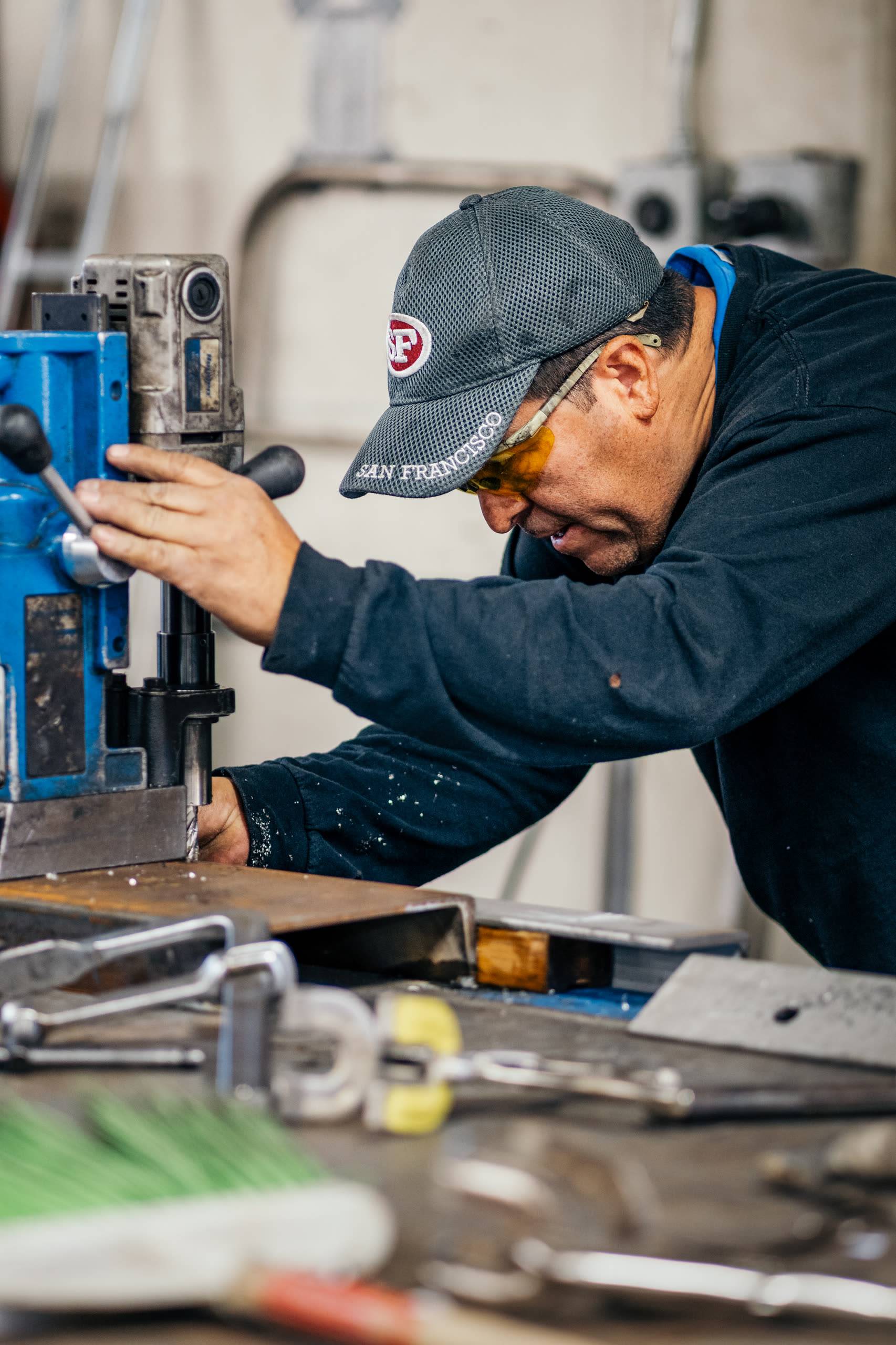
A splice in a long member is almost never there because the engineer wanted it. It is there because the fabricator could only handle twenty feet, so the member was cut in half, both halves were processed, and a connection was designed to put them back together.
That connection costs material, welding, inspection and often an engineering review. It also becomes a point somebody has to look at every time the structure is surveyed. If the member could have been made in one piece, all of that was avoidable.
What a 40 foot infeed actually changes
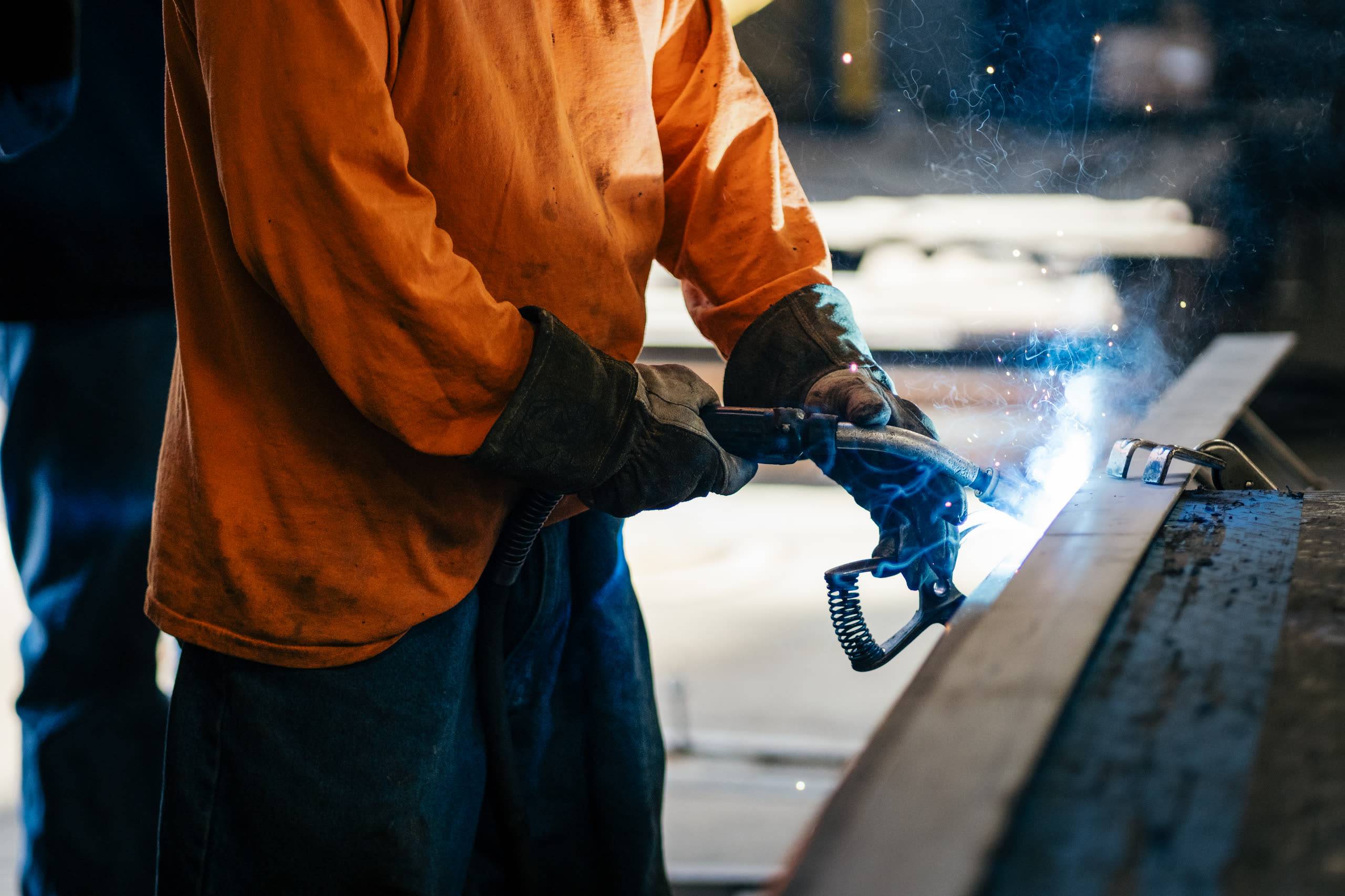
Our tube laser runs a 40 foot infeed with a 24 foot outfeed and automatic feed, with two chuck operation. In practice that means a full length member goes in, gets every hole, cope, slot and weld prep cut into it, and comes out finished without being handled in between.
The accuracy follows from that. Every feature on the member is placed from the same datum by the same machine, so holes at the far end line up with holes at the near end. On a spliced member they are placed from two different setups and the error adds up exactly where you least want it.
Where this shows up on a job
Long span purlins and girts, handrail and guardrail runs, conveyor frames, equipment skids, mezzanine edge beams, canopy framing and stair stringers. Anything where the member wants to be continuous and the fabricator usually says it cannot be.
If you have a drawing with a splice on it, send it over. Sometimes the splice is there for transport or erection reasons and has to stay. Often it is there because of a machine limit that does not apply here, and taking it out makes the piece cheaper and better.
Before you call
Questions we get asked
Not answered here? The fastest route is a phone call to the shop.
Got a drawing? Talk to the shop.
Call and we will talk it through, or send the scope and drawing set and we will get back to you with pricing and a schedule.