
Architectural, not industrial
Metal Canopies and Screen Walls
South Coast Iron fabricates metal canopies, screen walls, sunshades and decorative facade elements from Placentia, California. Perforation and pattern work is cut on our 20 kW laser, and the finish is done in house rather than subcontracted.
- Metal Fabrication
- Structural Steel
- Custom Fabrication
- Access & Safety Systems
- Silos & Hoppers
- Laser Cutting
At a glance
Specifications
| Sheet capacity | 20 kW laser, 74 in x 168 in table, up to 1.5 in |
|---|---|
| Materials | Stainless, aluminum, carbon steel, bronze, copper |
| Pattern work | Cut from designer files, perforation and custom patterns |
| Finishes | Polished and brushed in house, powder coat, anodized |
| Detailing | In house, SolidWorks |
| Installation | Available across Southern California |
What we cover
- Entry canopies, walkway covers and sunshades
- Perforated and patterned screen walls
- Facade panels, fins and louvres
- Decorative gates and entry features
- Stainless, aluminum, carbon steel, bronze and copper
Pattern work is a laser job
Screen walls and decorative facades live or die on the pattern. Punched, drilled or plasma cut, the edges tell you how the panel was made from across a courtyard, and a pattern that repeats across twenty panels has to repeat exactly.
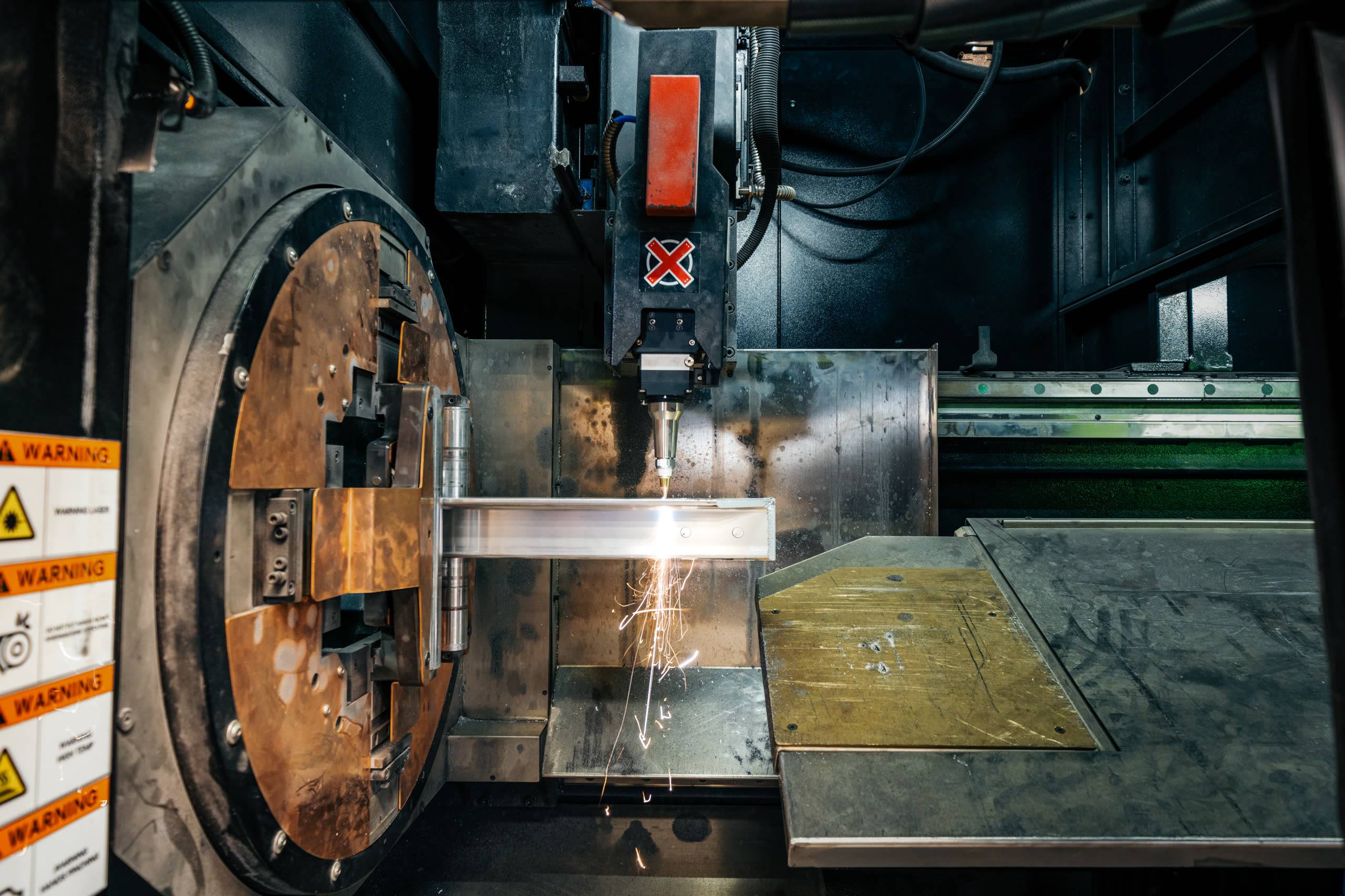
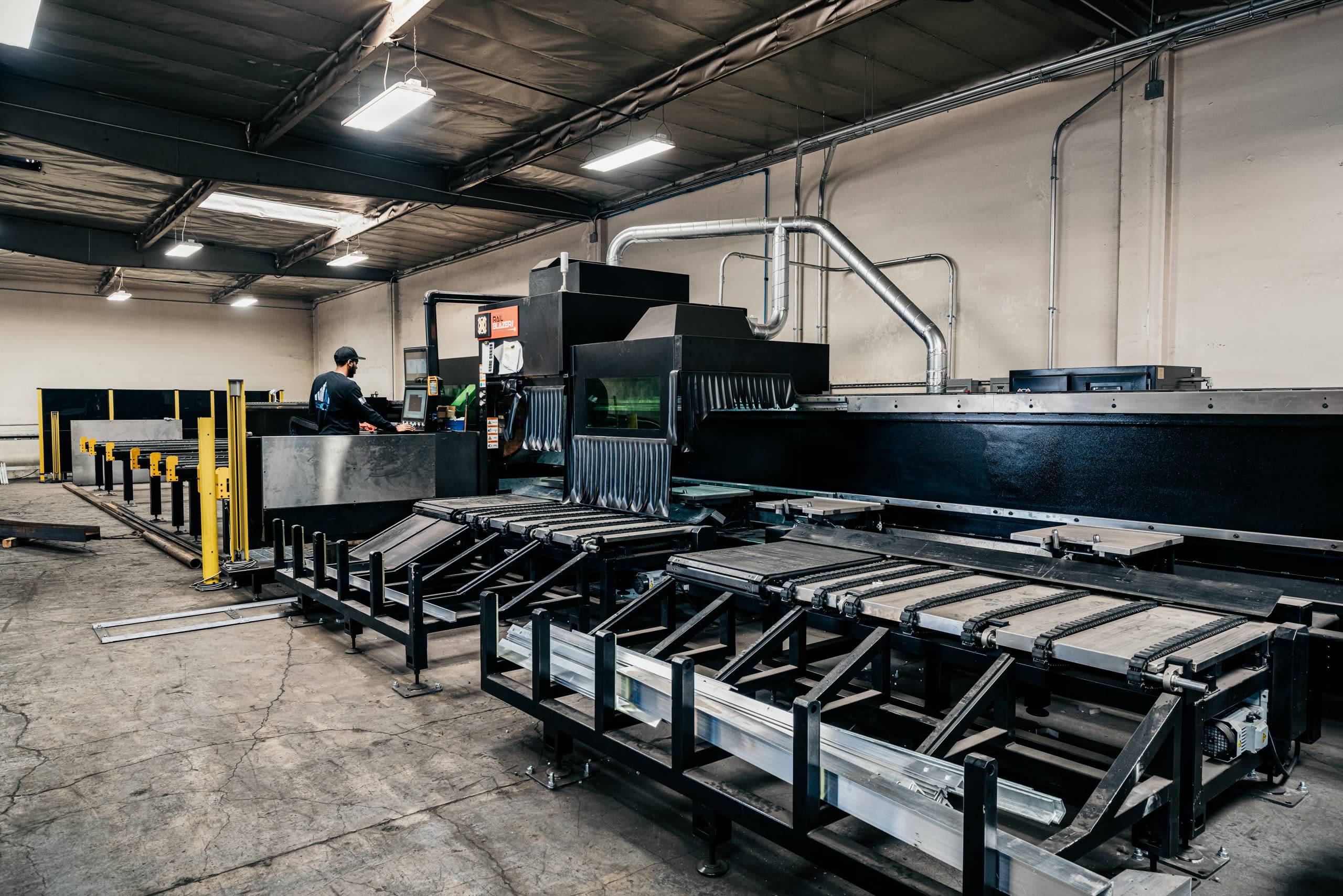
Our 20 kW sheet laser cuts the pattern straight from the designer file at a 74 by 168 inch table size, so panels are large, edges are clean and the hundredth hole matches the first. That is the practical reason architects send this work to a laser shop rather than a general fabricator.
Canopies are a connection problem
The visible part of a canopy is the easy part. The part that decides whether it gets built on schedule is how it attaches to the building, how it drains, and how it accommodates movement.
Those details are better settled before the drawings are issued. We would rather look at a design early and flag a connection that will be awkward than price something that has to be revised after approval. That conversation is free and it routinely saves a revision cycle.
The finish is specified, not assumed
On architectural work the finish is part of the design and it has to carry across every panel and every joint. We polish in house, which is what makes matching across an assembly realistic rather than hopeful.
If the design calls for powder coat or anodizing we manage that too, but the weld dressing that happens before it still has to be consistent, and that stays with us.
Before you call
Questions we get asked
Not answered here? The fastest route is a phone call to the shop.
Got a drawing? Talk to the shop.
Call and we will talk it through, or send the scope and drawing set and we will get back to you with pricing and a schedule.